Foundation structure
Small trees, evergreens, and durable shrubs that organize space and hold the composition through winter.
Trees, shrubs, perennials, grasses, and ground layers selected for site conditions, scale, sequence, establishment, and the amount of care the owner actually wants.
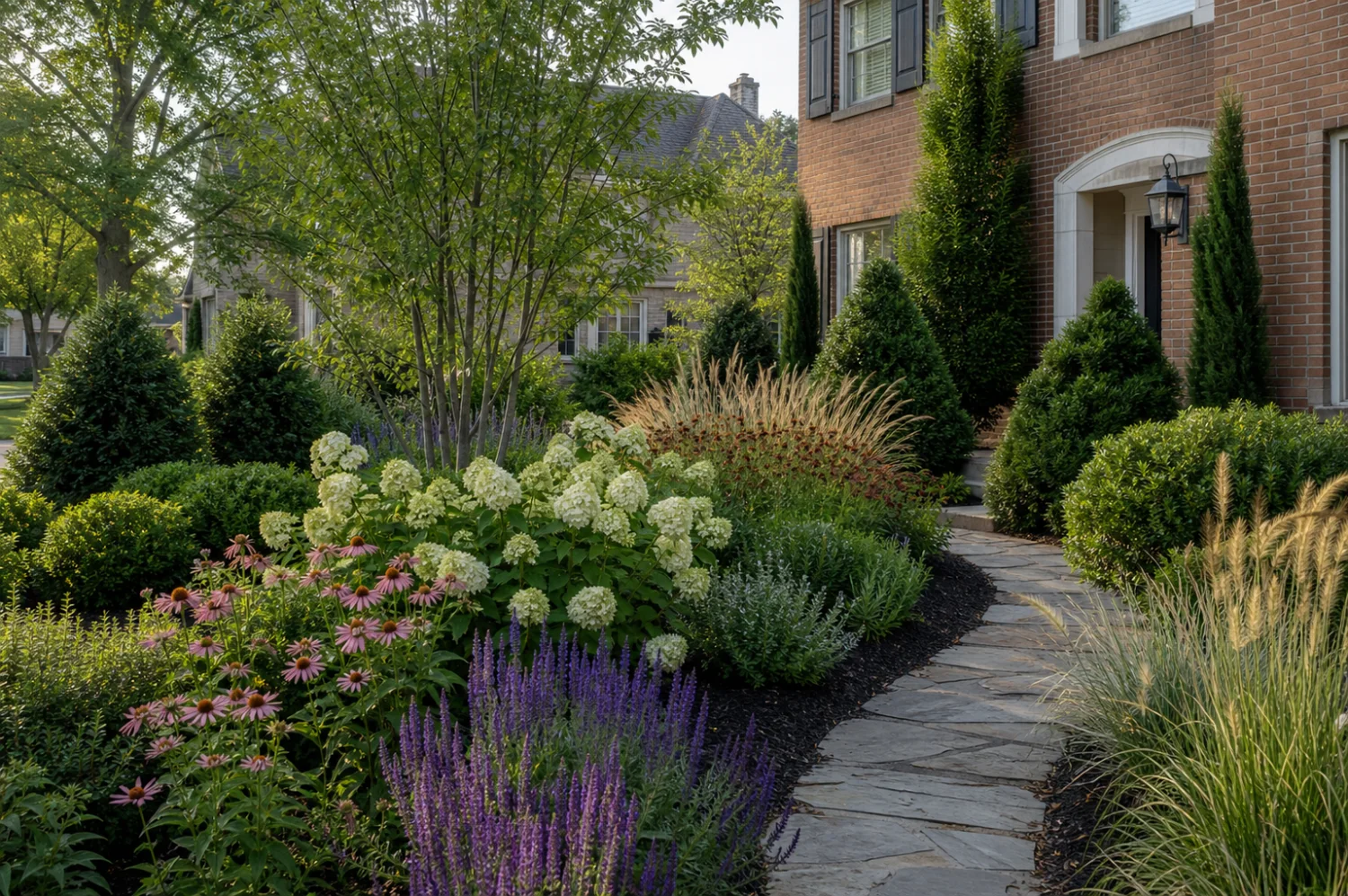
Canopy, enclosure, screening, winter form, repeated masses, long-season foliage, moments of flower, and room to mature create a garden that does not depend on one week in June.
Describe the planting need →Small trees, evergreens, and durable shrubs that organize space and hold the composition through winter.
Foliage, texture, bloom, seed heads, bark, and fall color distributed across the year.
Light, soil, moisture, exposure, deer pressure, salt, scale, drainage, and nearby architecture.
Regionally suitable species and cultivars considered alongside performance, availability, and design intent.
Soil preparation, planting detail, watering responsibility, mulch, monitoring, and realistic early-year expectations.
Spacing, selective pruning, division, edits, and stewardship based on how the planting is meant to develop.
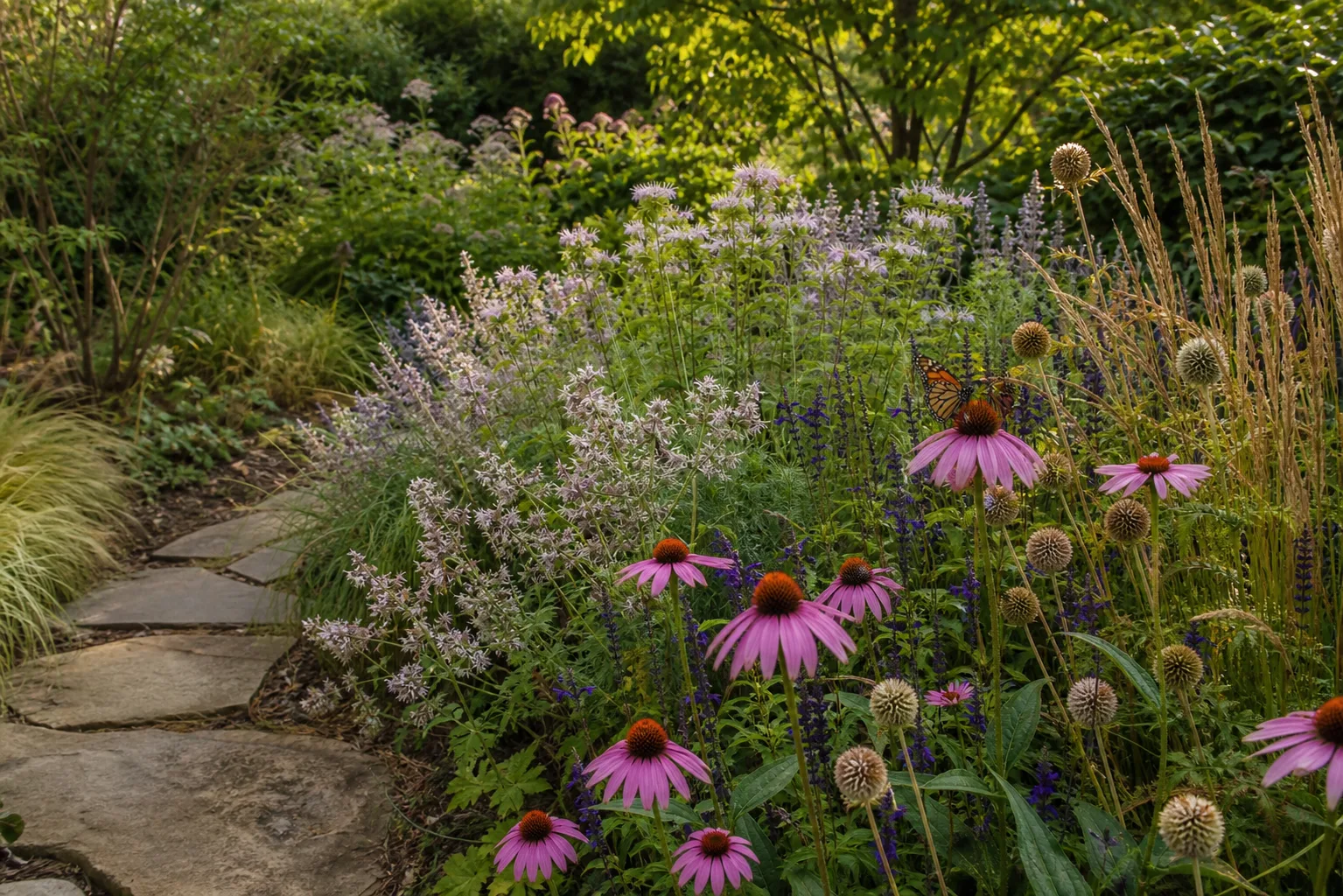
Shape, texture, repetition, structure, and adapted plant communities keep the landscape coherent between peak moments.
A dense plant list is not automatically a designed garden. Mature scale, site fit, visual rhythm, installation detail, watering, and early editing all matter.
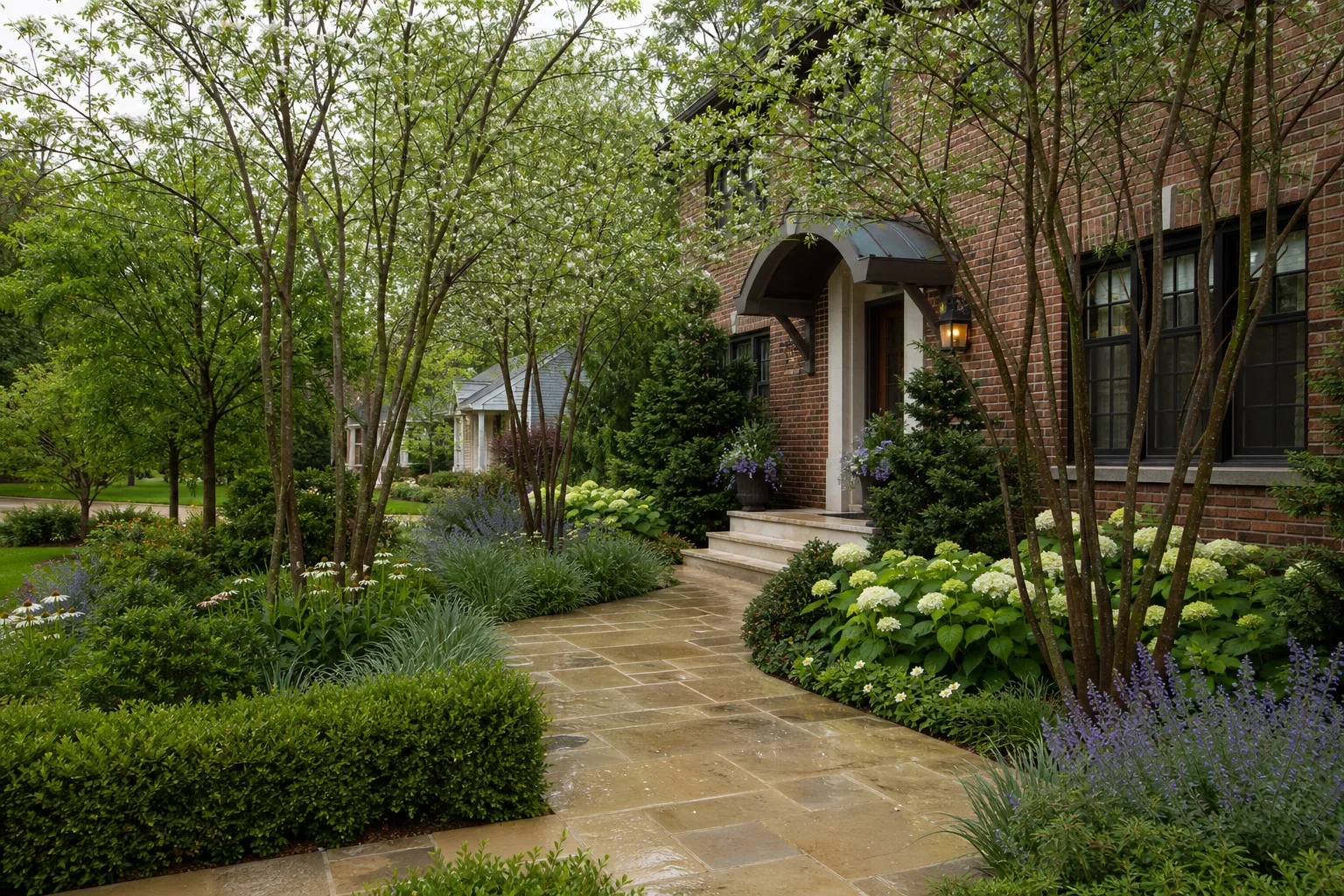
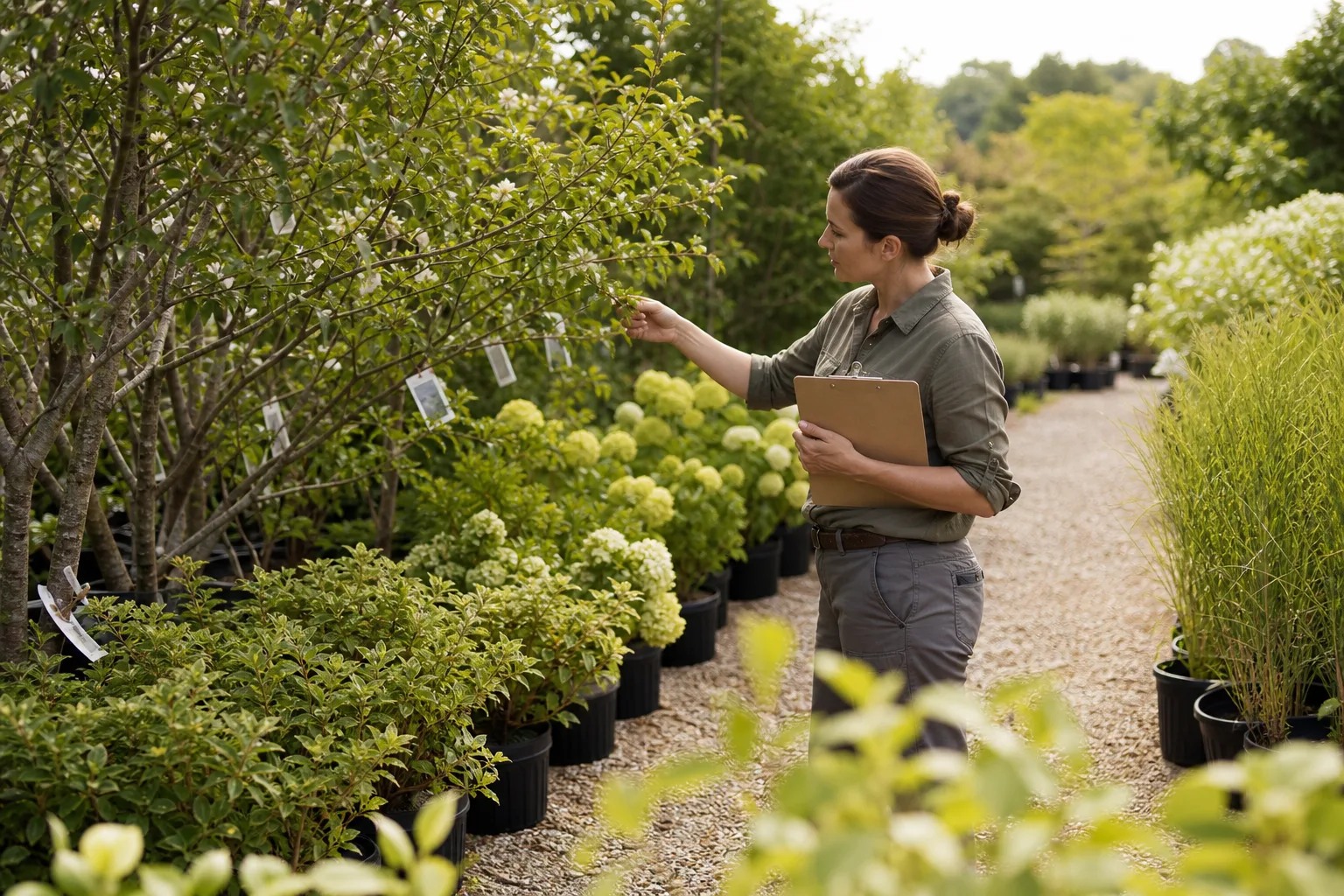
Start with the site. Sun and shade are only the beginning. Soil structure, drainage, reflected heat, salt, wind, root competition, deer pressure, snow storage, and existing canopy change what is realistic.
Use a hierarchy. Trees organize the long view. Shrubs provide mass and enclosure. Perennials, grasses, bulbs, and ground layers create sequence and texture at human scale.
Plan maturity. A garden should not be installed as a finished photograph. Spacing, expected growth, early weed pressure, mulch, and temporary gaps should be explained honestly.
Define establishment. Watering equipment, owner responsibility, monitoring, replacement terms, and the expected first two seasons belong in the handoff.
Good educational content makes the sales conversation more specific without pretending every property has the same answer.
A real planting philosophy may combine regionally native species, suitable cultivars, and other well-adapted plants based on design goals, availability, performance, and site constraints.
That depends on installed sizes, spacing, growth rate, site conditions, care, losses, and the choice between immediate density and room to mature.
The proposal and care plan should say exactly who provides equipment, checks moisture, adjusts frequency, and responds during heat or absence.
Replacement terms should identify duration, exclusions, required care, availability, substitutions, labor, and what evidence is needed.