Read the high and low points
The route, wall, swale, and planting should follow verified elevations rather than fight them casually.
A fictional concept organized around slope, movement, planting, and a visible surface-water path. It is not engineering, diagnosis, or a claimed built outcome.
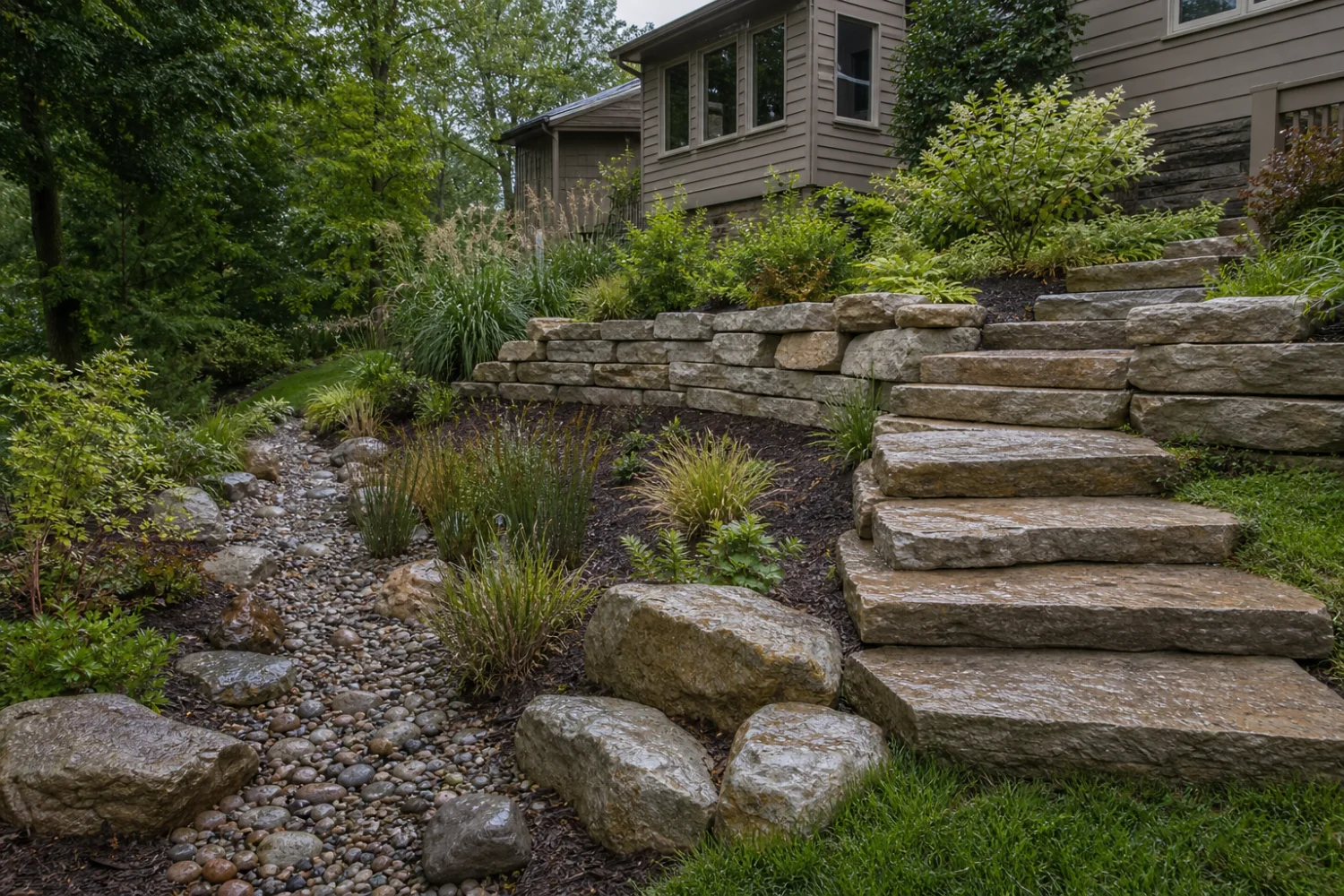
The concept imagines broad steps beside a low wall, with a shallow stone-lined swale leading through moisture-tolerant planting toward a safe, verified outlet.
The route, wall, swale, and planting should follow verified elevations rather than fight them casually.
Broad landings and clear edges turn a necessary grade transition into a comfortable garden walk.
A planted surface route may be easier to observe and maintain than an unexplained buried promise.
Every rain-garden or swale idea needs a safe overflow path and property-specific review.
Moisture, shade, root competition, inundation duration, salt, and seasonal change shape real selection.
Structures, foundations, flooding, utilities, property boundaries, and complex drainage may require other qualified professionals.
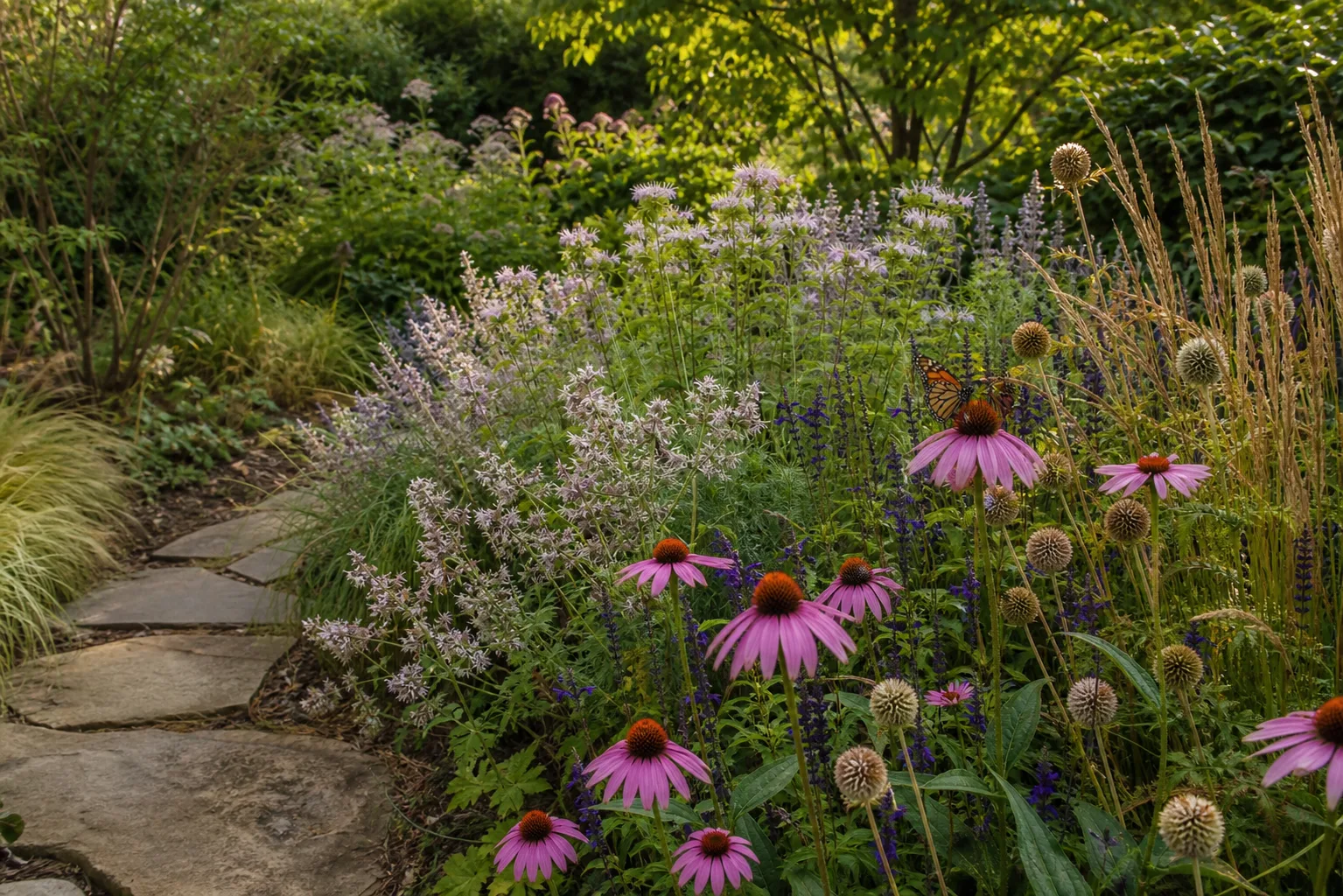
Multiple views make the fictional design question clearer while preserving the boundary between visual inspiration and professional drainage guidance.
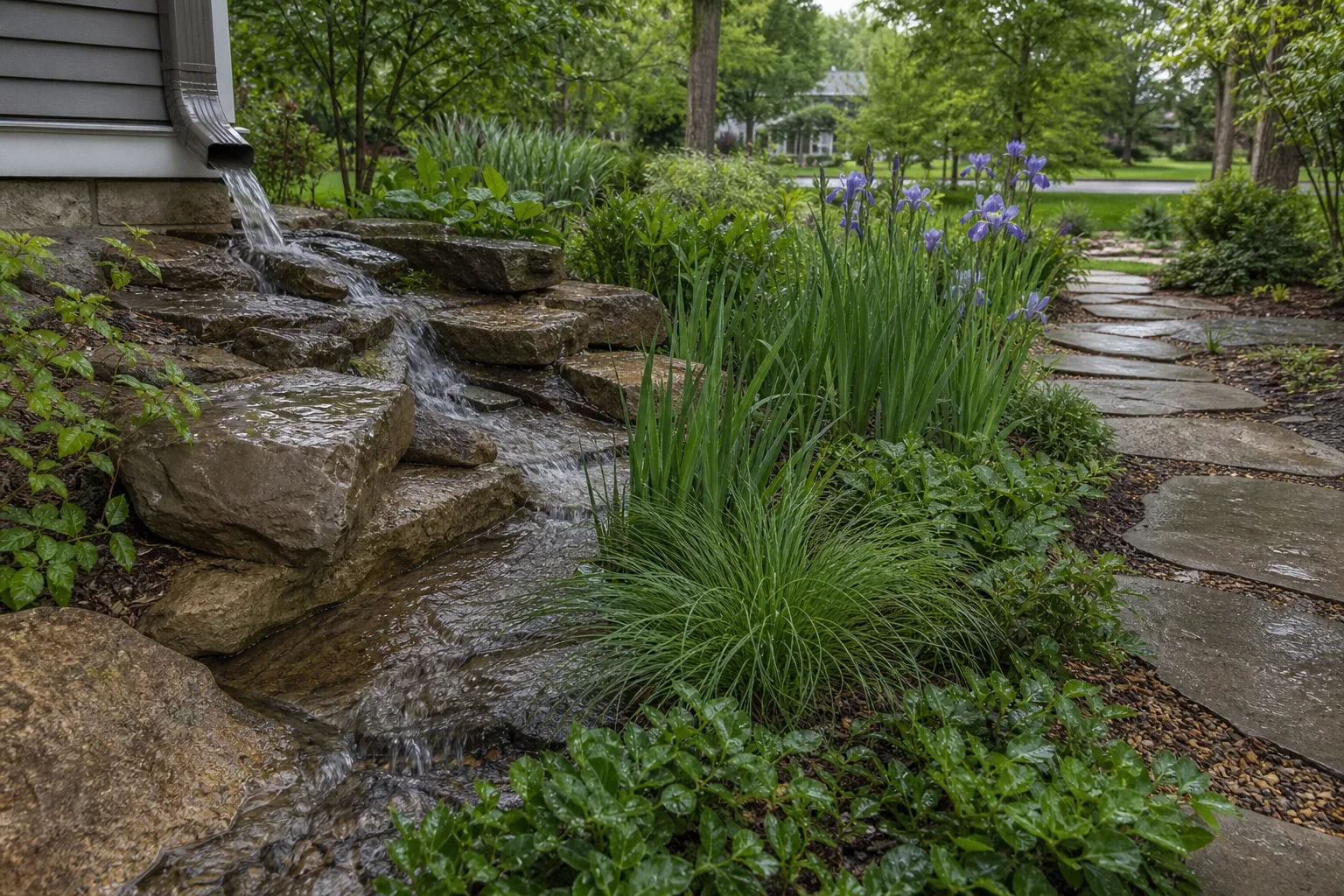
Before a real solution, qualified professionals may need to establish elevations, soils, infiltration, source volume, outlet capacity, utilities, easements, structural relationships, neighboring effects, and jurisdictional requirements.
Roof, drive, slope, neighbor, sump, utility, or another system.
Surface, pipe, swale, wall, soil, root zone, or an unintended low point.
Soil and planted systems have limits that depend on real conditions.
Every concept needs a safe, lawful, maintainable path beyond design rainfall.